

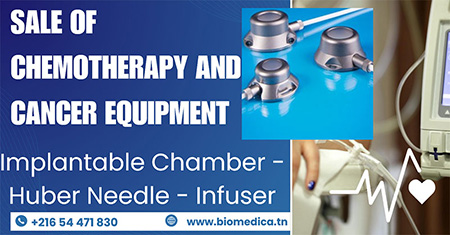
Implantable port for chemotherapy: Sale in Tunisia
Today, we are going to talk about a small device called an implantable port, or Port-A-4. It is actually a small catheter placed under the skin.
Hello, today we are going to talk about a small device called an implantable port, or Port-A-4. It is actually a small catheter placed under the skin. It’s a small box in which a small incision is made under local anesthesia. This small incision is connected to a window leading to a large deep vein.
Okay, what is it for? The implantable port is designed to ensure good hygiene with each injection, even when I inject myself, because chemotherapy is corrosive and has effects. Therefore, to protect our venous capital, we offer the patient the insertion of a catheter, or implantable port, before starting chemotherapy or immunotherapy.
It takes half an hour. The surgeon or anesthetist inserts it. Once in place, we perform a quick chest X-ray to check the proper positioning of the port.
So, on the first day, in case of pain, we administer antibiotics to prevent infection. We use standard painkillers. We can then use it immediately after insertion. Its lifespan is several years. Thanks to new implantable ports, flushing is no longer necessary.
What are the complications associated with this catheter? It is placed under the skin, barely visible. It’s a small incision that heals quickly. Complications include infection and thrombosis, which can cause redness or swelling behind the shoulder or neck. Complications occur in less than 1% of cases, but they do exist.
But the implantable port protects us, protects the patient. Why? Because we use highly corrosive chemotherapy agents, it prevents extravasation and, as the skin is smooth, the catheter ensures safety for us, the patient, and the nurse administering the chemotherapy.
We generally discuss this with the patient from the beginning.
-----
Painless insertion of an implantable port-a-cath device (PAC) before chemotherapy
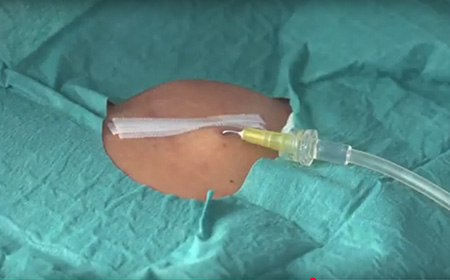
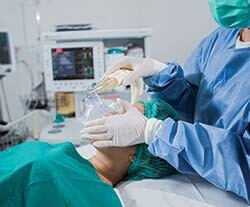
This device is inserted several hours to several days before the first chemotherapy injection. The patient is in the operating room, conscious and lying down. Once all preparations are complete, the procedure lasts about 25 minutes. The patient feels no pain, but it may be longer and last from 45 minutes to an hour. They speak and listen to music throughout the procedure.
This opening is closed with absorbable sutures fully hidden under the skin. Suture removal is not necessary and the procedure leaves a linear scar that disappears very quickly. After the procedure, you will be quickly taken back to the Fast Track unit, where a chest X-ray will be performed to check for any abnormalities.
The PAC, or Port-A-4, is a valuable aid during treatment. Its placement is carried out during a short surgical procedure under local anesthesia. You will be admitted to the outpatient surgery department on the same day.
You are not fasting; your skin, including your armpits and chest, must be clean and as hairless as possible. After completing the administrative formalities, you will be directed to the operating room, where you will be invited to wait in the waiting area.
The operating room nurse will accompany you to the OR and help you get settled.
The kit includes a device called an implantable port, about 25 mm in diameter. This device, placed under the skin, is connected to a thin, flexible tube called a catheter. This catheter, about the size of the veins in your hand, is inserted into a large vein in the body, usually the jugular vein at the base of the neck or the subclavian vein.
This device provides secure access to the venous system and allows the administration of powerful medications, such as chemotherapy, while protecting the venous system.
You will be lying on your back, head turned to the side and feet slightly elevated. Please inform us of any discomfort. The procedure takes an average of 45 minutes. Preparation and equipment setup take the most time. Take this opportunity to relax.
The anesthetist who inserted the port may guide the procedure using an ultrasound to visualize subcutaneous structures. If you wish, they can explain the device, its benefits, and the procedure step by step.
After the procedure, a follow-up booklet will be given to you to present at each use of the port. You will then be taken to the radiology department for a chest X-ray to verify proper insertion of the port. You will then return to the outpatient surgery department, where you may dress comfortably.
Once the anesthetist has given clearance, the team will authorize you to return home. In the following days, you may experience moderate pain or temporary discomfort in the neck area, usually relieved by paracetamol.
Do not drive that day. If possible, ask a relative to accompany you home.