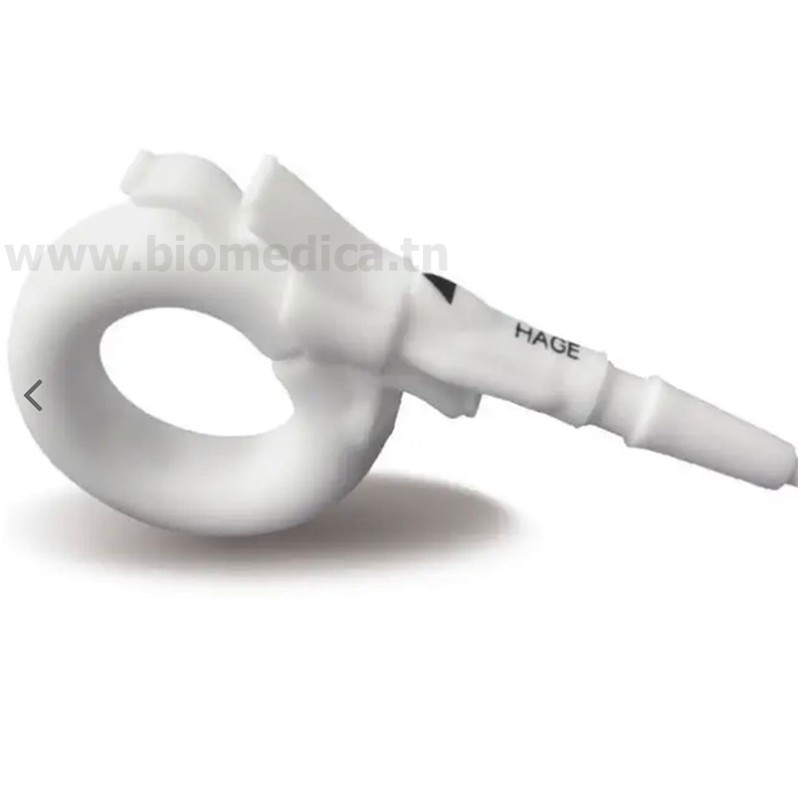
HELIOGAST® Adjustable Gastric Band – Morbid Obesity Treatment
Heliogast® is the adjustable gastric band that allows for easy, stress-free, and lasting treatment of morbid obesity.
The band is connected to a subcutaneous device—an implantable port-a-catheter—which allows its internal diameter to be adjusted by injecting saline solution.

HELIOGAST Gastric Band Surgical Procedure
This simple and easy-to-perform technique is mastered by many surgical teams. It is generally performed laparoscopically and requires only a short hospital stay. Due to its non-invasive and reversible nature, this procedure is recommended in most cases.
Multidisciplinary Patient Care
Postoperative rehabilitation is essential to help patients adapt their eating habits. Patients are cared for by a multidisciplinary team including surgeons, gastroenterologists, dietitians, and psychologists.
The team plays a crucial role in weight loss, weight stabilization, and patient recovery: obesity has diverse causes, thus requiring a comprehensive approach.
Highly Effective Heliogast HAGA Gastric Band
The excellent tolerability is directly linked to the significant effectiveness of the Heliogast HAGA gastric band in terms of weight loss. While studies have confirmed that successful gastric banding surgery should allow patients to lose 50% of their initial excess weight, Heliogast helps patients maintain this ideal result in the long term.
Well-Tolerated HELIOGAST Gastric Band
The tolerability data for the Heliogast gastric band has been the subject of numerous publications. Since its launch, of more than 9,000 cases analyzed, one in ten Heliogast gastric bands has been included in scientific studies. The incidence of complications such as band slippage or gastric pouch dilation is extremely low (<3%), and patient comorbidities have also significantly improved.
Professional HELIOGAST Technology
Reversible Surgery
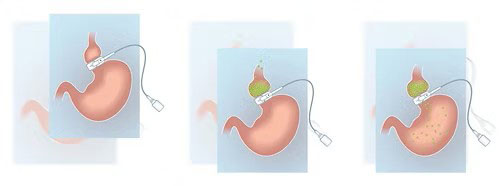
The HELIOGAST gastric band is an adjustable band implanted in the upper part of the stomach, dividing it into two parts like an hourglass. The gastric pouch can be calibrated using a probe. The band is connected to the implanted port by a catheter, allowing it to be inflated or deflated (tightened or loosened).
Band Sizes Available
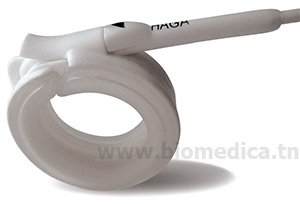
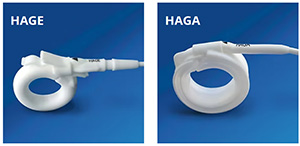
HAGA
Maximum total volume: 10 cm³
This band is the only one with a double-supported adjustable membrane, designed to improve stability and reduce the risk of displacement.
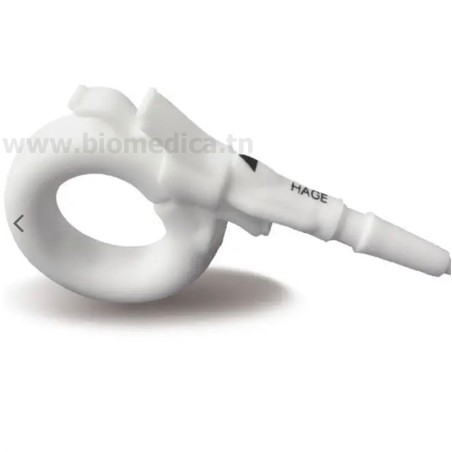
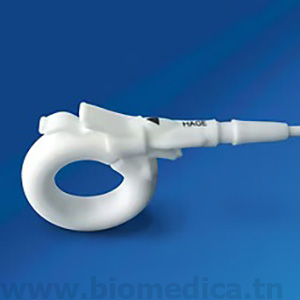
HAGE
Maximum total volume: 7 cm³
Implanted Port Sizes
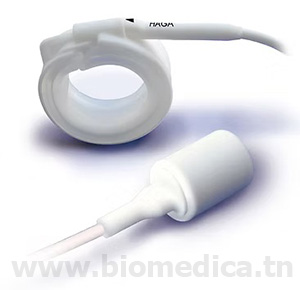
Three unique, patented implanted ports with a silicone surface ensure patient comfort. Among them, the cylindrical port (EV3) allows for 360° puncture without fixation, thus eliminating the risk of port inversion.
HELIOGAST Gastric Band Clinical Data
Results
After analyzing nearly 10,000 cases, one in ten cases since the launch of the Heliogast gastric band has been the subject of scientific publications. The incidence of complications such as band slippage or gastric pouch dilation is extremely low (<3%), and significant improvements in comorbidities have been observed.
A 2021 study (2) confirmed the excellent efficacy of the Heliogast band 10 years after implantation.
Efficacy
After 5 years of treatment with the HELIOGAST® HAGA adjustable gastric band, weight loss reached 68%.
Eating Behavior
Eating habits changed thanks to learning to chew slowly and better portion control (reducing the number of times food passed through the gastric band). These clinical observations were corroborated by a study (1) conducted in Spain since 2022, which demonstrated that the HAGA gastric band is a safe and effective treatment for obesity, both in terms of tolerability and efficacy.
HELIOGAST, Adjustable Annular Implant for Gastric Banding
given the increasing prevalence and severity of obesity.
Indications
Adult patients meeting the following criteria are eligible for this treatment:
- Patients with a body mass index (BMI) ≥ 40 kg/m², or a BMI ≥ 35 kg/m² and at least one comorbidity likely to improve after the procedure (including hypertension, obstructive sleep apnea-hypopnea syndrome (OSAHS) and other serious respiratory diseases, serious metabolic diseases, particularly type 2 diabetes, disabling osteoarthritis, and non-alcoholic steatohepatitis);
- Patients who have not responded to a comprehensive medical, nutritional, dietary, and psychological treatment regimen administered for 6 to 12 months as a second-line therapy;
- Patients with insufficient weight loss or an inability to maintain weight loss;
- Patients with a body mass index (BMI) ≥ 40 kg/m², or a BMI ≥ 35 kg/m² and at least one comorbidity likely to improve after the procedure (including hypertension, obstructive sleep apnea-hypopnea syndrome (OSAHS) and other serious respiratory diseases, serious metabolic diseases, particularly type 2 diabetes, disabling osteoarthritis, and non-alcoholic steatohepatitis);
- Patients who have not responded to a comprehensive course of medical, nutritional, dietary, and psychological treatment administered for 6 to 12 months as a second-line therapy;
- Patients with insufficient weight loss or an inability to maintain weight loss;
- Patients with a BMI ≥ 40 kg/m², or a BMI ≥ 35 kg/m², and an inability to maintain weight loss;
- Patients with a BMI ≥ 40 kg/m², or a BMI ≥ 35 kg/m², and an BMI ≥ 35 kg/m².
- Patients who have received comprehensive preoperative information and have undergone multidisciplinary preoperative assessment and management;
- Patients who have understood and accepted long-term medical and surgical follow-up;
- Acceptable surgical risks.
Contraindications
The contraindications for bariatric surgery are as follows:
- Severe cognitive or psychiatric disorders;
- Severe and unstable eating disorders;
- Patients who may be unable to participate in long-term medical follow-up;
- Dependence on alcohol or psychoactive substances, legal or illegal;
- No prior medical history;
- Life-threatening illness in the short or medium term;
- Contraindications to general anesthesia.
Product Description
The HELIOGAST device consists of the following components:
- An adjustable silicone gastric band with an inflatable inner layer. The band width can be adjusted by injecting filling fluid;
- An implantable injection port allows for adjusting the band diameter;
- A silicone catheter connects the gastric band to the injection port.
- Implantable accessories: ballooned gastric tube, locking device, Huber needle, infusion syringe, blunt needle, and closure cap.
Types of Gastric Bands
There are two types of gastric bands:
The HAGE band is designed for the implantation of a 12 mm cannula; the maximum injection volume is 7 cm³.
The HAGA band is designed for the implantation of a 15 mm cannula; the maximum injection volume is 10 cm³. Wider than the HAGE band, it features a double support balloon. Both bands offer implantable ports: HSI, EV1, and EV3, the type of which varies depending on the band size.
How it Works
The bands constrict the upper part of the stomach, thus limiting its capacity and triggering the satiety reflex (reducing the amount of food ingested). The band is adjustable: its tightness determines the speed at which food passes from the superior vena cava to the inferior vena cava (thus slowing intestinal transit).
Associated Interventions and Services
The procedures associated with the placement of an adjustable gastric band are listed in the Classification of Common Medical Procedures (CAM) and are covered by health insurance:
- HFMA009 Open surgery for the placement of an adjustable gastric band in the treatment of morbid obesity
- HFMC007 Laparoscopic surgery for the placement of an adjustable gastric band in the treatment of morbid obesity
- HFKA002 Open surgery for the replacement of an adjustable gastric band in the treatment of morbid obesity
- HFKC001 Laparoscopic surgery for the replacement of an adjustable gastric band in the treatment of morbid obesity
Place in Treatment Strategies
Bariatric surgery is a second-line treatment option, after the failure of a well-established medical, nutritional, dietary, and psychological treatment program lasting 6 to 12 months. Other gastrectomy treatment options, besides gastric banding, include:
- Sleeve gastrectomy (or longitudinal gastrectomy)
- Gastric bypass
- Biliopancreatic shunt
Vertical tubular gastrectomy is rarely performed today.
Sleeve gastrectomy is a restrictive procedure that involves removing approximately two-thirds of the stomach, including the portion containing the cells that secrete ghrelin, the appetite-stimulating hormone. The stomach is then reduced to a vertical tubular shape, allowing food to pass quickly into the small intestine.
Gastric bypass is a restrictive procedure that induces malabsorption. It reduces the amount of food ingested (by decreasing the stomach's capacity) and the body's absorption of nutrients by bypassing part of the stomach and intestine. Food arrives directly in the middle part of the small intestine, where absorption is lower.
In obese patients, bariatric surgery should be considered as a second-line treatment after 6 to 12 months of comprehensive medical, nutritional, dietary, and psychological management that has proven ineffective. Currently, various surgical techniques are available, and the choice of technique is influenced by multiple factors (medical, surgical, and other).
Severity of the Condition
"Obesity is characterized by an excess of body fat, leading to adverse health consequences. In clinical practice, body size is generally assessed using the body mass index (BMI), calculated based on weight and height: weight (kg) / height (m)²." Obesity is defined as a BMI ≥ 30 kg/m², and morbid obesity as a BMI ≥ 40 kg/m².
Obesity can lead to various complications, including cardiovascular, pulmonary, and metabolic problems. In addition to these numerous complications that increase mortality, obesity can impair daily functioning and have psychological and social consequences, severely impacting quality of life.
Obesity can cause disability, a reduced quality of life, and even death.
Obesity combined with other health problems, as well as morbid obesity, can be life-threatening.
Delivery in Tunisia
Delivery of the HELIOGAST HAGE gastric band is available in Tunis, Carthage, El Menzah, Ben Arous, La Soukra, Bab Saadoun, Gammarth, Raoued, Ariana, Lac, La Marsa, Ezzahra, as well as Sidi Bouzid, Béja, Sfax, Zaghouan, Mahdia, Gafsa, Tozeur, Monastir, Sousse, Bizerte, Tataouine, Jendouba, Nabeul, Medenine, Djerba, Kairouan, Kasserine, Siliana, Tabarka, Kébili, Kef, Gabès, and throughout Tunisia.
Contact
Call us: (+216) 54 471 830